

Blepharoplasty in Dubai (Eyelid Surgery)
Blepharoplasty — also known as eyelid surgery — removes or repositions excess skin and fat from the upper and lower eyelids to restore a more alert, rested, and naturally youthful appearance. The eyes are the most expressive feature of the face — and the first to show the signs of ageing.
Every procedure is planned and performed personally by Dr. Leonard Josipovic at Seline Clinic, Umm Suqeim, Dubai.
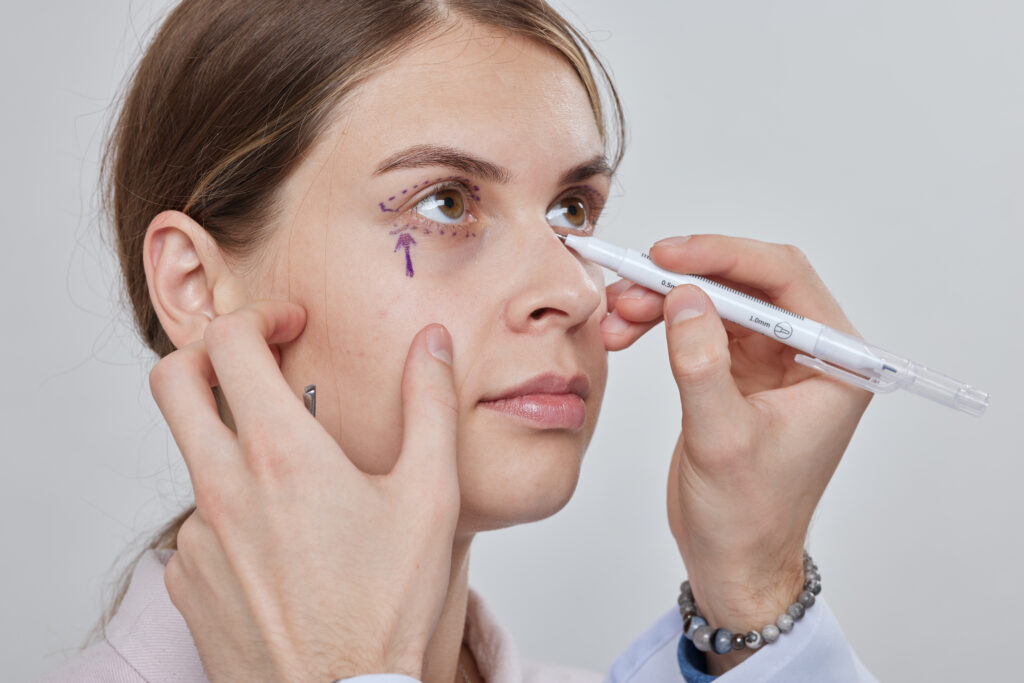
What is Blepharoplasty (Eyelid Surgery) in Dubai?
Blepharoplasty is a surgical procedure that refines the upper eyelids, lower eyelids, or both — removing or repositioning excess skin, fat, and muscle to address hooding, puffiness,
under-eye bags, and the tired or aged appearance that develops in the periorbital area over time.
The eyelid skin is the thinnest in the body and among the first to show visible ageing. As skin loses elasticity, excess tissue accumulates above and below the eyes — causing upper eyelid hooding that creates a heavy, tired expression, and lower eyelid bags that persist regardless of sleep or lifestyle. In more significant cases, excess upper eyelid skin can encroach on the visual field.
Blepharoplasty addresses these changes precisely — restoring the natural eyelid contour and creating a refreshed, more alert appearance without altering the essential character of the eye. The result looks rested and natural — never operated on or artificial.
Types of Blepharoplasty in Dubai
Blepharoplasty is not a single procedure — it is a family of surgical approaches, each targeting a different area of the eyelid with a different technique.
The right type for you depends on your anatomy, your concerns, and your goals.
Dr. Leonard assesses every patient individually during consultation — evaluating upper eyelid skin excess, lower lid fat distribution, canthal position, and brow height before recommending the most appropriate approach. The four main types of eyelid surgery performed by Dr. Leonard in Dubai are outlined below.
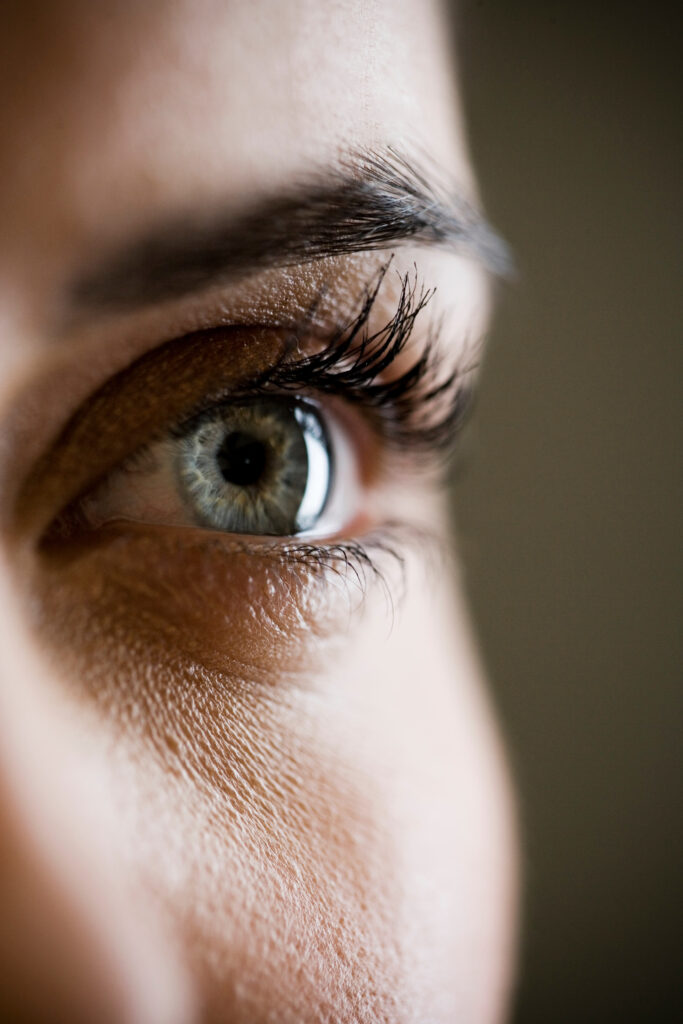
Upper Blepharoplasty (Upper Eyelid Surgery)
Dr. Leonard makes a precise incision within the natural upper eyelid crease — a location that heals discreetly and is effectively invisible once closed. Excess skin is removed with millimetre precision, and where appropriate, excess or herniated fat is conservatively removed or repositioned to avoid hollowness. The crease is reformed cleanly, and the incision is closed with fine sutures.
The result is a more open, alert eye with a clearly defined crease — looking rested rather than operated on.
Lower Blepharoplasty (Lower Eyelid Surgery)
Lower blepharoplasty addresses under-eye bags, puffiness, and skin laxity beneath the eye. Fat pads that support the eye in youth can prolapse forward over time — creating persistent bags that make patients look tired, regardless of how rested they actually are.
Dr. Leonard uses a transconjunctival approach for most lower lid procedures — making the incision inside the lower eyelid, completely concealed, with no external scar. This allows the herniated fat to be carefully repositioned or conservatively removed while preserving the structural integrity of the lower eyelid.
Where skin laxity is also a concern, a subciliary incision — placed just beneath the lower lash line — allows for gentle skin tightening alongside fat management, leaving only a fine, discreet scar.
Combined Upper and Lower Blepharoplasty in Dubai
Many patients benefit from addressing both the upper and lower eyelids in a single procedure — treating the periorbital area comprehensively for a fully refreshed result. Combined blepharoplasty allows for a balanced, harmonious improvement across the entire eye area in one anaesthetic episode and one recovery period.
Asian Blepharoplasty (Double Eyelid Surgery)
Asian blepharoplasty — also known as double eyelid surgery — creates or defines an upper eyelid crease in patients whose anatomy does not naturally form one. This is one of the most commonly performed aesthetic procedures in Asian patients and requires specific expertise in understanding the anatomical differences in periorbital structure between different ethnicities. Dr. Leonard tailors every Asian blepharoplasty individually to enhance definition while preserving natural eye shape and ethnic identity.
Ideal Candidates for Blepharoplasty in Dubai
Blepharoplasty may be suitable for individuals who:
Have excess or drooping skin of the upper eyelids that creates a heavy or tired appearance
Experience under-eye bags or puffiness caused by fat protrusion or skin laxity
Notice shadowing or hollowing beneath the eyes that affects facial balance
Feel their eyes look tired, aged, or less defined despite adequate rest
Have good overall health and realistic expectations about surgical outcomes
Wish to refresh the eye area while preserving natural eye shape and expression
Prefer subtle, measured rejuvenation rather than dramatic change.
Blepharoplasty may not be suitable if:
- You have significant dry eye syndrome.
- You have uncontrolled thyroid disease affecting the eyes.
- You have cardiovascular conditions that increase anaesthetic risk.
- Your expectations extend beyond what eyelid surgery can achieve alone.
A thorough consultation with Dr. Leonard is essential — assessing eyelid anatomy, skin quality, brow position, and facial proportions to determine whether upper, lower, or combined blepharoplasty is the most appropriate approach.
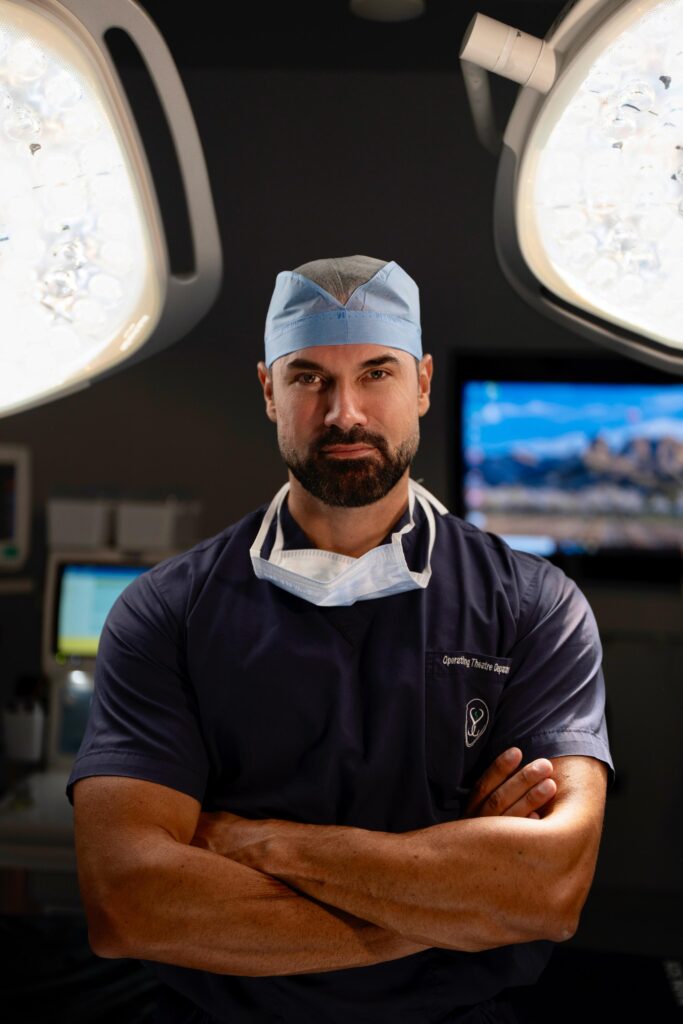
What to Expect — Blepharoplasty in Dubai
Before your Blepharoplasty
Your journey begins with a detailed consultation with Dr. Leonard. He will assess eyelid crease height, skin excess, fat distribution, canthal tilt, and brow–lid balance to plan the procedure with millimetre-level precision. Photography and measurements are taken. Pre-operative instructions include stopping blood-thinning
medications and supplements at least 2 weeks before surgery, stopping smoking, and arranging support for the first 24-48 hours post-operatively.
During your Blepharoplasty
Upper blepharoplasty is often performed under local anaesthesia with sedation as a day case procedure — meaning no overnight stay is required. Combined upper and lower blepharoplasty or more complex cases may be performed under general anaesthesia. Operative time is typically 1 to 2 hours for upper lids alone, and up to 2.5 hours for combined procedures. Dr. Leonard uses tissue-sparing techniques throughout — conservatively removing or repositioning fat to achieve a smooth, natural result while avoiding the hollowness that can result from aggressive fat removal.
After your Blepharoplasty
Mild swelling and bruising around the eyes are expected for the first 1-2 weeks. Cold compresses applied gently reduce swelling in the first 48 hours. Most patients feel comfortable returning to work and social activities within 7-10 days once bruising has faded. Sutures are removed at 5-7 days for upper lids. Avoid strenuous exercise and anything that raises blood pressure for 2-3 weeks. Final results are visible within 4-6 weeks as all swelling fully resolves.
Recovery Timeline for Blepharoplasty in Dubai
Timeframe
What to Expect
Day 1–2
Swelling and bruising most pronounced. Rest with head elevated. Cold compresses applied gently. Avoid bending and lifting. Eye drops prescribed to prevent dryness.
Day 3-5
Swelling beginning to reduce. Bruising changing colour as it fades. Light activity around the home acceptable.
Day 5-7
Upper lid sutures removed at follow-up appointment. Most patients feel comfortable in public with sunglasses.
Week 1-2
Most patients return to desk work and social activities. Makeup can be applied carefully from day 10.
Week 2-4
Residual swelling continuing to resolve. Eyelids beginning to look and feel more natural.
Month 1-3
Final result clearly visible. Scars fading and softening. Upper eyelid crease fully defined.
Month 3-6
Scars fully matured. Result stable and long-lasting.
Why Choose Dr. Leonard for Blepharoplasty in Dubai

Eyelid surgery is one of the most technically demanding procedures in facial aesthetics. The margin for error is minimal — the eyelid skin is the thinnest in the body, the anatomy is precise, and the outcome is visible every time the patient makes eye contact. Getting it wrong — removing too much skin, over-harvesting fat, or misplacing the incision — creates results that are difficult and sometimes impossible to revise.
Dr. Leonard approaches every blepharoplasty with a measurement-led, tissue-sparing philosophy — mapping eyelid crease height, skin excess, fat distribution, and canthal position with precision before any incision is made.
Board-Certified Plastic Surgeon
Dr. Leonard Nenad Josipovic is certified by the German Board of Plastic and Aesthetic Surgery (DGPRÄC) — one of the most rigorous plastic surgery certification standards in Europe. Every procedure is performed to the highest clinical and aesthetic standard.
Trained at World-Leading Institutions
Medical education at Goethe University Frankfurt with specialist internships at UCLA and Imperial College London — institutions at the forefront of facial plastic surgery technique.
Measurement-Led Precision
Every blepharoplasty is planned with millimetre-level accuracy — mapping eyelid crease height, canthal tilt, and brow-lid balance before surgery to ensure the result is symmetrical, natural, and appropriate for the patient’s individual anatomy.
Every Procedure Performed Personally
Dr. Leonard performs every eyelid surgery personally — from consultation and surgical planning through to the procedure and all follow-up appointments. You are never passed to a junior team member at any stage.
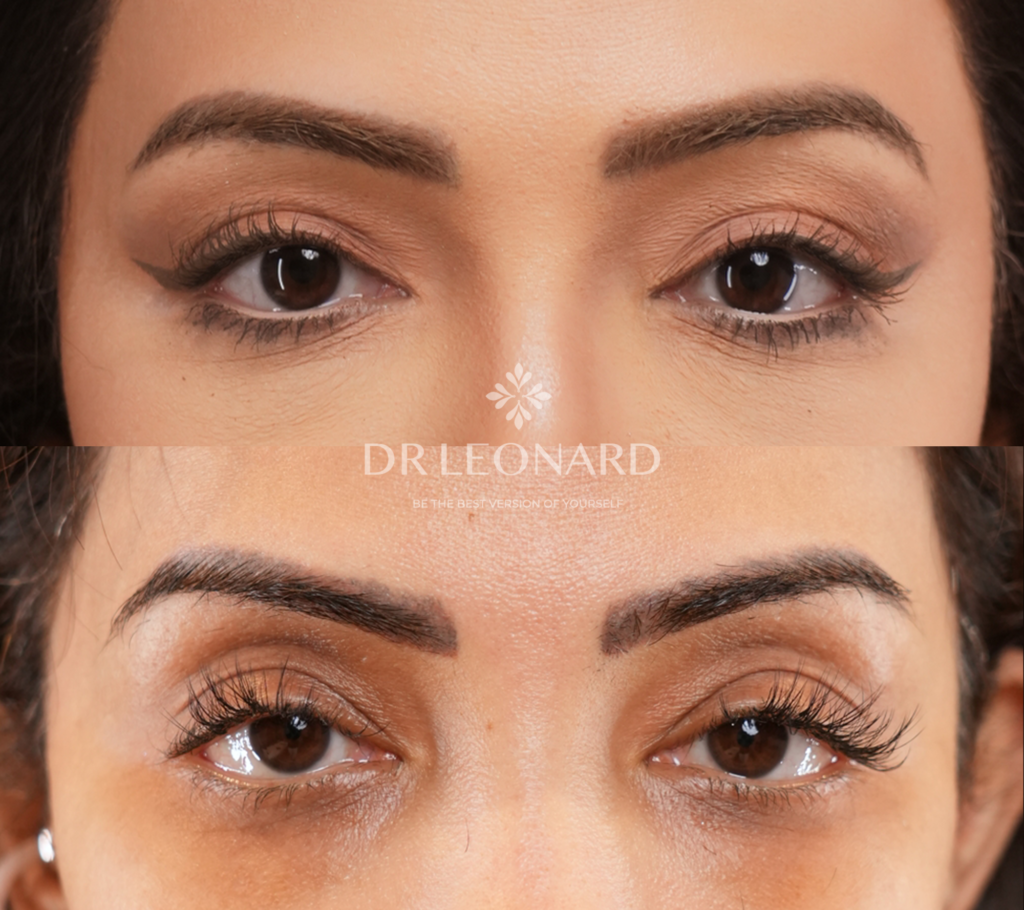
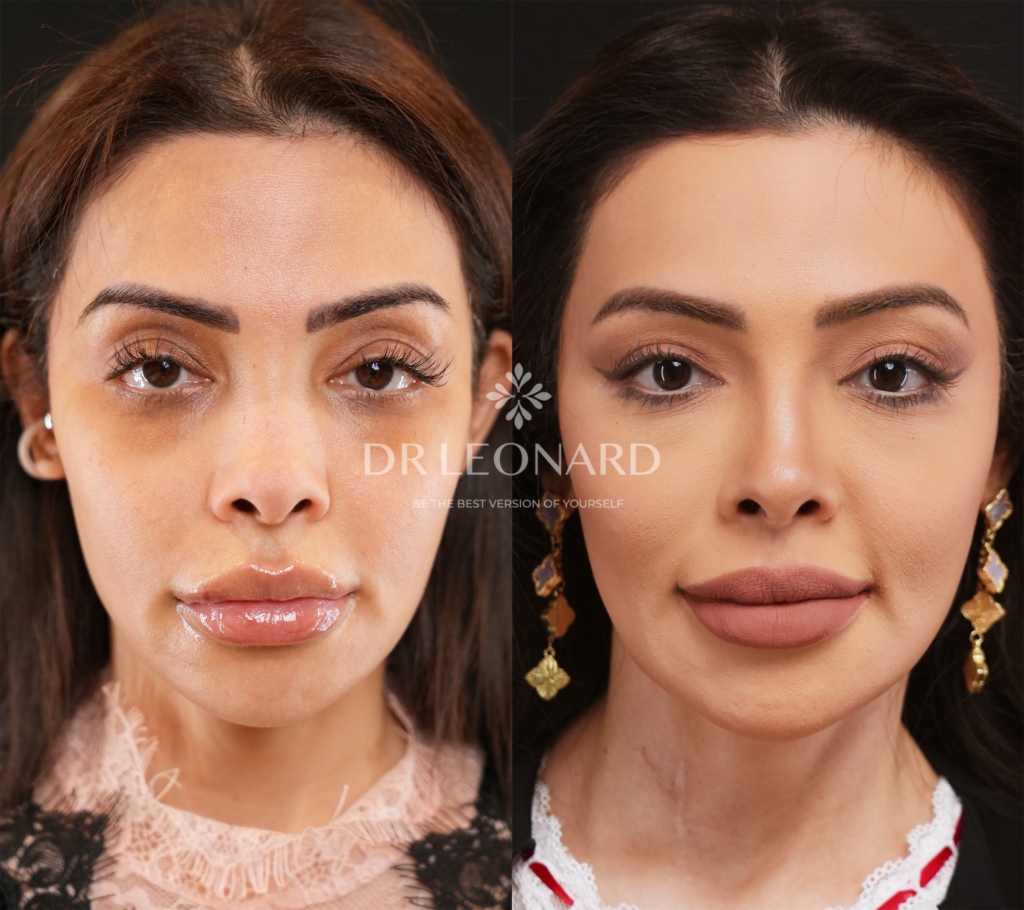
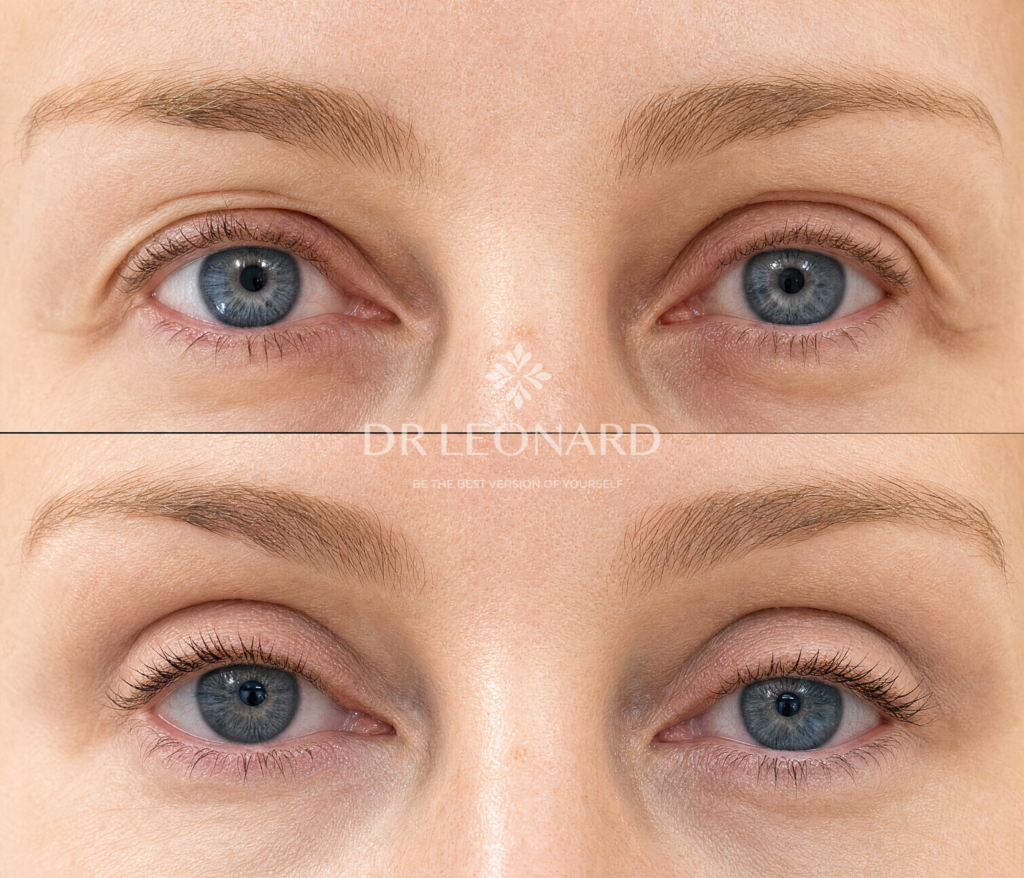
Blepharoplasty Dubai Results — Before & After
Real patients. Real results. Every procedure performed personally by Dr. Leonard.
The following results are from patients who underwent blepharoplasty with Dr. Leonard in Dubai. Each case was individually planned and performed by Dr. Leonard personally, with a focus on natural, refreshed outcomes that restore a rested appearance without altering the essential character of the eye. Results vary depending on the patient’s anatomy, the technique used, and their post-operative care. All images are shared with full patient consent in accordance with DHA guidelines.
Frequently Asked Questions — Blepharoplasty in Dubai
Everything you need to know before booking your consultation.
What is the difference between blepharoplasty and eyelid surgery?
They are the same procedure. Blepharoplasty is the clinical term for eyelid surgery — a procedure that removes or repositions excess skin, fat, and muscle from the upper and/or lower eyelids to restore a more alert, rested, and youthful appearance.
Will blepharoplasty make my eyes look unnatural?
In experienced hands blepharoplasty produces a completely natural result. The most common cause of unnatural
eyelid surgery results is aggressive tissue removal — taking too much skin or fat, which creates an over-corrected,
hollow appearance. Dr. Leonard uses a conservative, tissue-sparing technique that removes only what is necessary —
ensuring the result looks refreshed rather than operated on.
Is blepharoplasty performed under local or general anaesthesia?
Upper blepharoplasty is most commonly performed under local anaesthesia with sedation — meaning you are
awake but completely comfortable. Combined upper and lower blepharoplasty may be performed under general
anaesthesia. Dr. Leonard will discuss the most appropriate option for your procedure during consultation.
How long do blepharoplasty results last?
Upper blepharoplasty results typically last 7-10 years before any recurrence of skin laxity becomes noticeable.
Lower blepharoplasty results addressing fat prolapse are generally longer-lasting since the fat has been repositioned
permanently. The ageing process continues after surgery — but the improvement achieved is lasting.
Will there be visible scarring after blepharoplasty?
Upper blepharoplasty incisions are placed within the natural eyelid crease — typically invisible with the eye
open and very discreet when closed. Lower blepharoplasty using the transconjunctival approach leaves
no external scar at all. Where a subciliary incision is used, the scar sits just below the lash line and is effectively invisible once healed.
How soon can I return to work after blepharoplasty?
Most patients return to desk work within 7-10 days once bruising has faded. Those with client-facing roles
may prefer to wait 10-14 days. Sunglasses can be worn to conceal residual bruising during the first week if needed.
Can blepharoplasty improve my vision?
In cases where excess upper eyelid skin encroaches on the visual field, blepharoplasty can improve peripheral
vision. This functional benefit is assessed during consultation — if visual obstruction is confirmed, the procedure may be covered by health insurance in some cases. Dr. Leonard will advise accordingly.
Can blepharoplasty be combined with a brow lift?
Yes — and for many patients it is the recommended combination. A heavy or descended brow can contribute
significantly to upper eyelid hooding, and blepharoplasty alone will not address brow ptosis. Dr. Leonard assesses brow position during consultation and advises whether a combined approach would produce a more complete result.
What is Asian blepharoplasty or double eyelid surgery?
Asian blepharoplasty creates or defines an upper eyelid crease in patients whose anatomy does not naturally form one. It is the most commonly performed aesthetic procedure among Asian patients globally and requires specific expertise in periorbital anatomy. Dr. Leonard tailors every procedure to preserve natural eye shape and ethnic identity.
How much does blepharoplasty cost in Dubai?
The cost of blepharoplasty in Dubai varies depending on whether upper, lower, or combined eyelid surgery is performed, the anaesthetic approach, the surgical facility, and whether additional procedures are combined. Dr. Leonard provides a personalised cost breakdown during consultation after assessing your anatomy and treatment goals.
Is blepharoplasty safe in Dubai?
Blepharoplasty performed by a board-certified plastic surgeon in a DHA-licensed facility is a safe and well-established procedure. Dr. Leonard operates at Seline Clinic and selected accredited facilities in Dubai — all DHA regulated with complete pre and post-operative care protocols in place.
What is the difference between upper and lower blepharoplasty?
Upper blepharoplasty addresses excess skin and fat from above the eye — correcting hooding and a heavy eyelid appearance. Lower blepharoplasty addresses under-eye bags and puffiness below the eye — caused by fat prolapse and skin laxity. Both can be performed simultaneously as a combined procedure.
What is the best age to get blepharoplasty in Dubai?
There is no single best age for blepharoplasty in Dubai. Most patients seeking upper eyelid surgery are between 40 and 60, when skin laxity becomes significant enough to create a heavy or hooded appearance. However younger patients with genetic predisposition to heavy eyelids or under-eye bags may also be suitable candidates. Suitability is assessed individually during consultation — not by age alone.
Is blepharoplasty in Dubai worth it?
For patients with genuine eyelid concerns — whether aesthetic or functional — blepharoplasty consistently delivers high patient satisfaction rates. The improvement in overall facial appearance and the elimination of a permanently tired expression have a significant positive impact on confidence and quality of life. The results are long-lasting, the recovery is manageable, and the procedure is well-established with a strong safety profile when performed by a board-certified surgeon.
What is the recovery time for eyelid surgery in Dubai?
Most patients return to desk work and light social activity within 7-10 days following blepharoplasty in Dubai. Bruising and swelling are most visible in the first 5-7 days and typically resolve enough for public comfort by day 10. Strenuous exercise should be avoided for 2-3 weeks. Final results are visible within 4-6 weeks as all residual swelling fully resolves.
Does eyelid surgery hurt?
Blepharoplasty is performed under local anaesthesia or general anaesthesia — meaning the procedure itself is
completely painless. Post-operative discomfort is typically mild and well managed with standard pain relief. Most patients describe a feeling of tightness rather than pain in the days following surgery. Eye drops are prescribed
to manage any dryness or irritation during the healing period.
What is the difference between blepharoplasty and a brow lift in Dubai?
Blepharoplasty removes excess skin from the eyelids themselves — correcting hooding caused by skin laxity at the eyelid level. A brow lift raises the position of the brow — correcting ptosis that originates above the eyelid. The two conditions often coexist and in many cases a combined approach produces the most natural and complete result.
Dr. Leonard assesses brow position during every blepharoplasty consultation to advise on whether a brow lift should be considered.
Can I wear contact lenses after blepharoplasty?
Contact lenses should be avoided for at least 2 weeks following blepharoplasty eyelid surgery. During this period the eyelids are healing and inserting or removing contact lenses carries a risk of disrupting suture lines and introducing infection. Glasses can be worn as normal. Dr. Leonard will confirm when it is safe to resume contact lens use at your follow-up appointment.